

The Digital Renaissance Of The Map
Coordinates Over Content


In our previous trend report, we highlighted the age of private influence: the shift to offline communities, close friends, private meme accounts, paywalled newsletters, Telegram chats, and real-world events and activations. Part reaction to the dead internet and AI slop feeds, part human imperative to embody real
spaces and belong to IRL communities, part reaction to EU’s new regulatory frameworks: we explored how this impacts NGOs, brands and creators alike.
Recently we’ve been witnessing an interesting paradox. On the one hand, as we’ve established, being offline (specifically, off the main social platforms) is undeniably a low key flex.
Yet simultaneously, its counter-logic popped up: subtly broadcasting your location, preferably in real time, preferably on a map, has become the ultimate social currency. The message is clear: “I’m too busy living IRL to be online”— performed, of course, online. It’s performative absence: the map pin becomes proof you have something better to do than scroll.
The contradiction isn’t accidental. What we’re seeing is a sort of gamification of presence itself: your offline coordinates now construct your online persona more powerfully than any caption or carefully curated grid ever could. Location has become identity, and sharing it has become performance.
Tell me where you are, and I will tell you who you are.
Today, the coordinates matter more than the content.
To post, you first have to be there. Concepts like “proximity posting” perfectly describe the coy move of posting from the right place, at the right time, as the new form of status signaling. Forget geotagging or staged shots in locations, think specific visual cues or detail shots that give away where you are. You don’t want to name it, you want to hint at it to a curated audience who will recognize the visual signals (a recycling of IYKYK).
This goes hand in hand with the boom in public space branding (restaurants, bars, cafes, hotels, clubs, gyms, events): the more unique, the better. You recognize the outside seating of La Maison in an IG Story, you instantly place the custom red-rimmed plates from 032c’s SS-26 Collection launch dinner at Mina in Berlin, and you decode someone’s sun-lounging at Hotel Il Pellicano by a glance of the yellow and white striped towels.
A decade ago, we used to say something was instagrammable, a term that feels borderline cringe nowadays. The same impulse, however, applies today, but the object of desire has shifted, and so have the rules of engagement. Where we once curated instagrammable products (you know it) now it’s the location itself that has become the commodity. The past year has even seen a series of brand activations in locally iconic, yet globally relatively unknown, spaces: Highsnobiety’s Bar Basso merch is still haunting us.
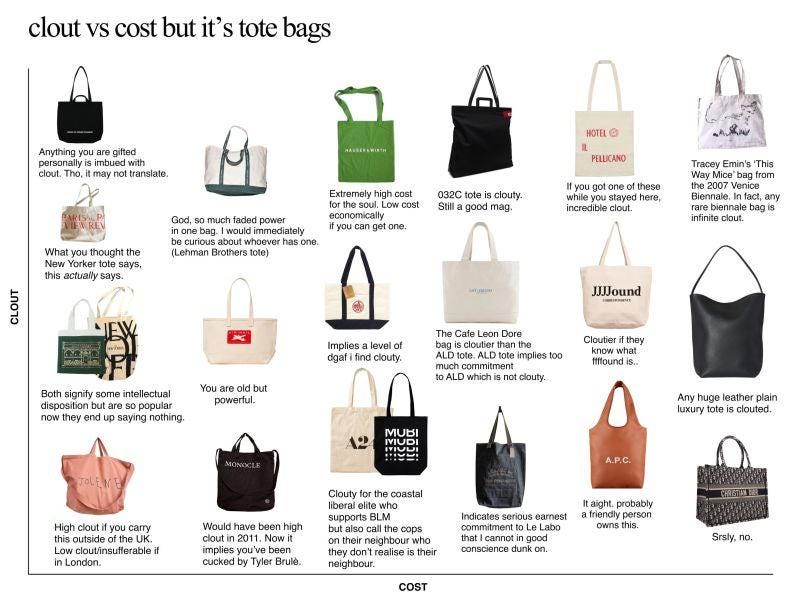
(This level of coded signaling still sits within subcultural or elite circles. The average user remains literal. The shift we describe starts at the cultural top and filters down, mirroring earlier ‘instagrammable’ aesthetics that began aspirationally. The mechanics of clout are still class-coded — participation in this aesthetic economy requires disposable income, travel freedom, and cultural literacy. For most audiences, the fantasy remains aspirational, not participatory.)
The map becomes the stage
Influencers are slowly turning Google Maps into a social platform, building followings through reviews, photos, and hyper-curated recommendations that surface in “Popular with Local Guides” and “Top Reviews.” Monetization follows the usual playbook: brand partnerships, local business deals, targeted ads, but many are also outright selling city-specific or activity-based map lists.
The demand for culturally-literate curation is undeniable. The old guard is feeling it: TripAdvisor and Yelp are dying slow deaths while new platforms rush in. Everywhere is Queer maps safe spaces for LGBTQ+ folk across the globe. Places functions as Raya’s review engine. Corner, a new social mapping app that feels like Google Maps, Yelp, Pinterest, and Instagram all in one, has already hit 50,000 downloads.
None of this is surprising when 77% of Gen Z discover restaurants on social media, according to a Vox Media and Eater survey earlier this year. The map becomes taste, access, and identity alongside GPS coordinates.
But it’s not just about location reviews: Gen Zers allegedly love to check in on their friends whereabouts, whether via Apple’s Find My app, Life360 or Snap Map. Last year videos tagged #findmyfriends on TikTok were viewed 38.6 million times.
Location-based social networks are, in fact, not new. As early as digital maps became a thing, tech bros scrambled to find ways to integrate them within social apps: the initiative proved its appeal in 2022 with Snapchat’s sister app Zenly which amassed 40 million active users. Zenly closed down, and was assimilated into Snapchat’s Snap Map, which recently announced the milestone of serving 400 million monthly active users. The new guard is also taking over here: Clyx, which pulls event and location data to help users find IRL gatherings and connects them with compatible strangers, just raised $14M to combat what its Gen Z founder calls “the planning tax” of modern friendship.
So what draws young people to the seemingly invasive practice of tracking their friends on a digital map? Most likely the trinity of modern anxieties: the desire for constant connection, the feeling of safety through surveillance, and the dopamine hit of instant information. These psychological hooks transform geography into intimacy. The third space of our times? Could be.
Now Instagram is gradually rolling out its new location-sharing function across all geographies, with the manifesto that it will “make it easier for friends to coordinate and link up for hangouts” and let users “explore location-based content.” Meta surely took notice of the fact that young consumers are gravitating towards in-person micro-communities and IRL experiences and wasn’t about to let that trend happen off-platform.**
**Of course, there’s also the small matter of hyper-granular geo targeted data, the kind advertisers adore. If the product is free… well, you know the rest. As with every platform pivot, altruism meets data extraction. Hyper-granular geo-targeting remains the real commercial prize.
So will the feed collapse into the map? And how can brands perform within this new paradigm?
Analog culture: Putting the brand on the (digital) map
The question for brands, creators, and agencies is no longer: How do we perform online? It should be: Where do we need to be, and what do we need to do, physically, so that we can exist online?
For creators, it means no longer creating content for the sake of content. Become the community leader, the host, the chat group initiator, the guide you trust. Focus on growing and nurturing micro-communities off the main social platforms and organize IRL gatherings. Gen Z “internet decoder” Ochuko Akpovbovbo’s calls her group chats her second algorithm. King Princess activates her album release party not with a livestream or in a mainstream venue, but by flying to Berlin to host at queer bar Stueck. Miranda July thinks her Substack IRL group meetings are “collective survival.” Then look for brands that are interested in building an IRL rapport through community trips, invite-only gatherings, etc.
For brands, it means designing activations that are not just photogenic, but anchoring: places, trips, events that give followers a reason to post. Performance media, third-party cookies, retargeting: these won’t fly in analog culture. Focus on brand dinners in culturally relevant spaces (Burberry x hip Norman’s Cafe), surprising brand collabs (Prada x Red Bull sponsoring the world’s biggest skate ramp event), invite-only gatherings, and valuable merch.
The strategic sweet spot lies in anchoring digital content to real coordinates, i.e. hybrid campaigns that use place as proof, not just as stage. If we’re right, by late 2026 the success metric won’t be follower count or views, but the density of your map: how many real-world points of contact your community can trace back to you.
For audiences, it means trading the infinite For You page for the reassurance of a pin: “This is where it happened, this is where I belong.” It’s the antidote to algorithm drift, the proof of embodied experience in a culture where it’s hard to escape simulation.
Still, this ‘embodied belonging’ assumes access — financial, physical, and geographic. The next frontier will be making analog culture inclusive beyond the big-city, high-income early adopters driving the narrative today.
In Other “Permanently Online” News…
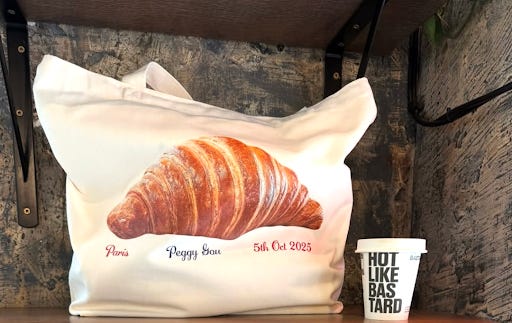
Coffee & croissant raves are the place to be, according to Axios and, well, Peggy Gou. “In case you missed it, merch is still available this week,” Peggy reminds her followers, a nod to the importance of event merch. (Please make seedy, sweaty, dark raves great again?)
Reminder to creators to quit never stop making weird things IRL from polymath Robin Sloan: “It’s wild that you can make money online, but when it comes to content and writing or art, the online money math is just absolutely punishing. You could be an aspiring YouTuber and post some really cool creative videos that get 100,000 views, and you’d be saying, “Well, that’s not going to cut it, right?”(...) The point is that offline math is so much more appealing and sustainable.”
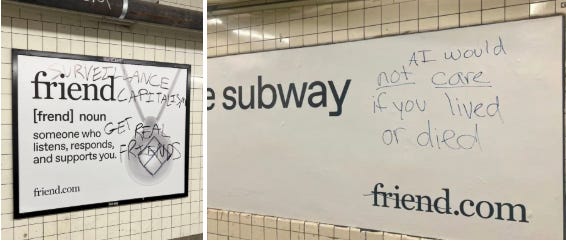
Taking digital brands into physical, public spaces, even just through OOH ads, demands a higher level of accountability compared to just running ads online. Case in point: the visceral backlash to Friend AI, a wearable “companion” whose posters blanketed NYC subways earlier this month. People revolted (for good reason) because analog culture is human, reactionary, political, and, also, unforgiving.
Signals & Sources
Everywhere Is Queer: A Business Spotlight on the LGBTQ+ App — (Them, 2024)
Instagram takes on Snapchat with new Instagram Map — (TechCrunch, 2025)
From sauna socials to run clubs: Are community event leaders the new influencers? — (Vogue Business, 2024)
Brain Rot Summer, Coldplaygate and the end of monoculture — (Business Insider, 2025)
Status posting: The new social media trend of summer 2025 — (Town & Country, 2025)
We’re losing ancient online recipes — (The Digital Native, 2025)
The Gen Z algorithm — (Mozilla Sidebar, 2025)
Future Generations Restaurant Dining Survey Research — (Eater, 2025)
Snap Map reaches new milestone of 400M monthly active users — (TechCrunch, 2025)
Analog Cultures Marketing Mix — (The Sociology of Business, 2025)
 | A guest post by
|